Stepping
Step clog is essentially a solo dance performed in wooden soled clogs where a rhythm is beaten out by tapping various parts of the clog against the floor ... the other clog ... somebody else's clog ...

Although we usually dance as a group we don't do clog morris. The difference is simple - clog morris (North West morris done in clogs) has complicated moves and simple steps, our movements are simple to non-existent, but the steps are (sometimes) complicated.
and Clogs
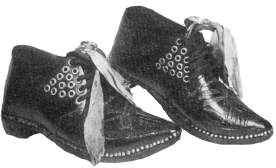 These are typical Lancashire 'Dandy' clogs - meant for
showing off, hence the extra eyelets, crimping (fancy
patterns in the leather) and pointy toes. Note the steep
ramp up at the toe - this makes for a point of balance with
the heels well off the ground. Handy for Lancashire/Cheshire style competitions
where a dancer was disqualified if his heels ever touched
the ground!
These are typical Lancashire 'Dandy' clogs - meant for
showing off, hence the extra eyelets, crimping (fancy
patterns in the leather) and pointy toes. Note the steep
ramp up at the toe - this makes for a point of balance with
the heels well off the ground. Handy for Lancashire/Cheshire style competitions
where a dancer was disqualified if his heels ever touched
the ground!
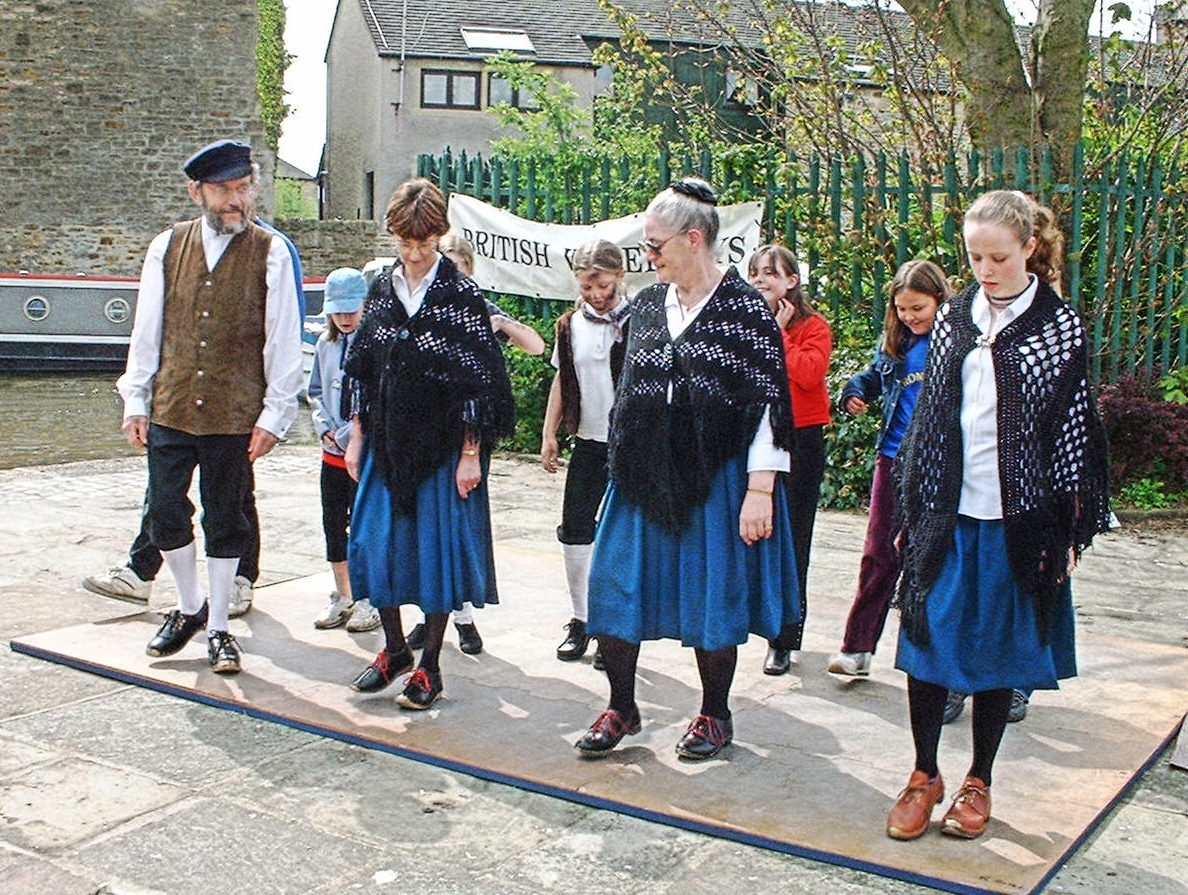 By contrast North Eastern style
clogs are very much flatter and the style of dance is
correspondingly different with heel beat steps forming a
large part of the repertoire.
By contrast North Eastern style
clogs are very much flatter and the style of dance is
correspondingly different with heel beat steps forming a
large part of the repertoire.
Which came first? - competition rules, clog style or dance style - don't know, what do you think ...
Lancashire & Cheshire
Although wooden soled footwear can be traced back for
hundreds of years the steps we know today probably started
to appear in Lancashire when agricultural workers left the
land for employment in the factories and barges of the
industrial revolution.
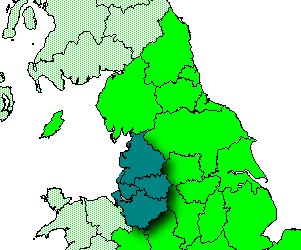 Here the rhythms of looms and
engines inspired the workers to beat time with their loose
clogs.
Here the rhythms of looms and
engines inspired the workers to beat time with their loose
clogs.
Teams of men dancing together resulted in the Clog Morris traditions of Lancashire and Cheshire but step clog is essentially a solo dance - which was often danced competitively, usually for a 'belt' and sometimes a cash prize.
The factory and street corner steps soon migrated to the
stage and many Variety artistes were known to do a bit of
clogging, best known is probably Charlie Chaplin who is
reputed to have performed the 'Seven Lancashire Steps' at the
famous City Varieties in Leeds.
Westmorland / Lakeland
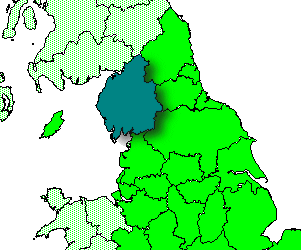 Sadly Westmorland no longer exists as a county having been
incorporated along with Cumberland and the Furness district of
Lancashire to make the 'new' Cumbria.
Sadly Westmorland no longer exists as a county having been
incorporated along with Cumberland and the Furness district of
Lancashire to make the 'new' Cumbria.
The whole area was sparsely populated, and dancing masters would travel to isolated villages to teach their steps. Clog dancing carried on there into the last century, typically done as a reel with eight bars of stepping followed by a reel of three.
Somehow 'Cumbrian' clog just doesn't sound right so the steps are still known as the "Westmorland Reel" or "Lakeland Stepping".
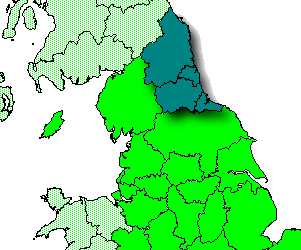
Northumberland & Durham
Clog dance in Northumberland and Durham reached a peak towards the end of the 19th Century when competitions developed which have helped the dance to survive to the present.
North East competitions have strict rules about the carriage
 of the dancer - ideally there should be no upper body
movement with the arms held comfortably straight by the
side. Marks are awarded for carriage, beats, steps and time
...
of the dancer - ideally there should be no upper body
movement with the arms held comfortably straight by the
side. Marks are awarded for carriage, beats, steps and time
...
... and in the Pedestal competition - If ye faall off -
yer oot!
